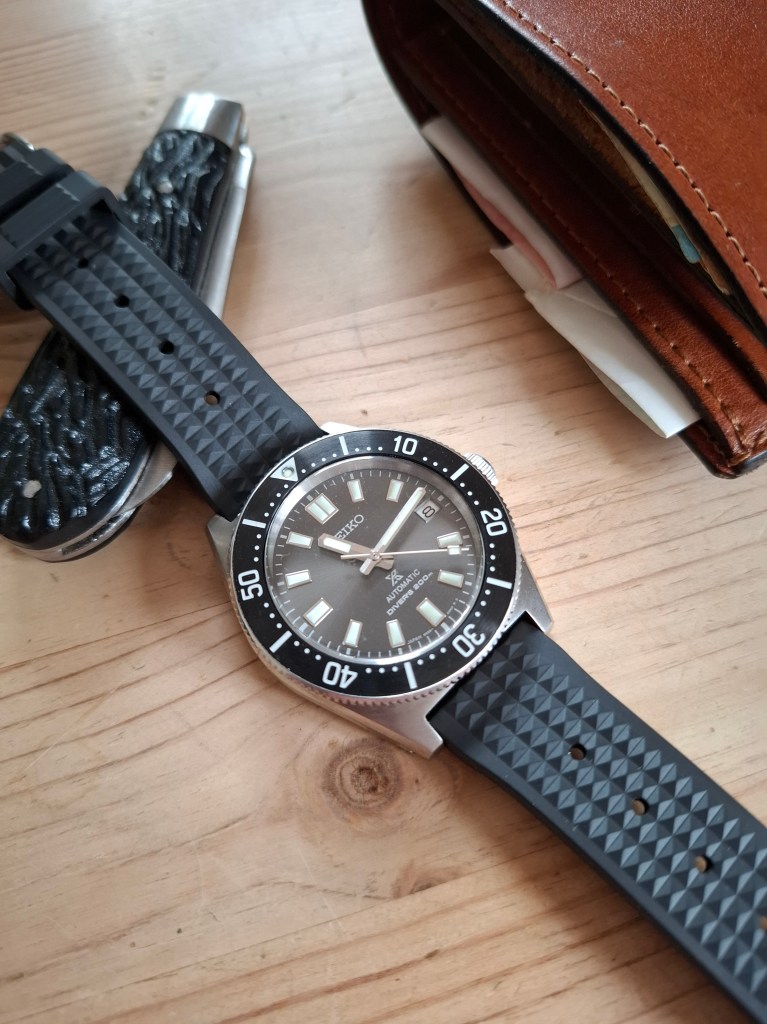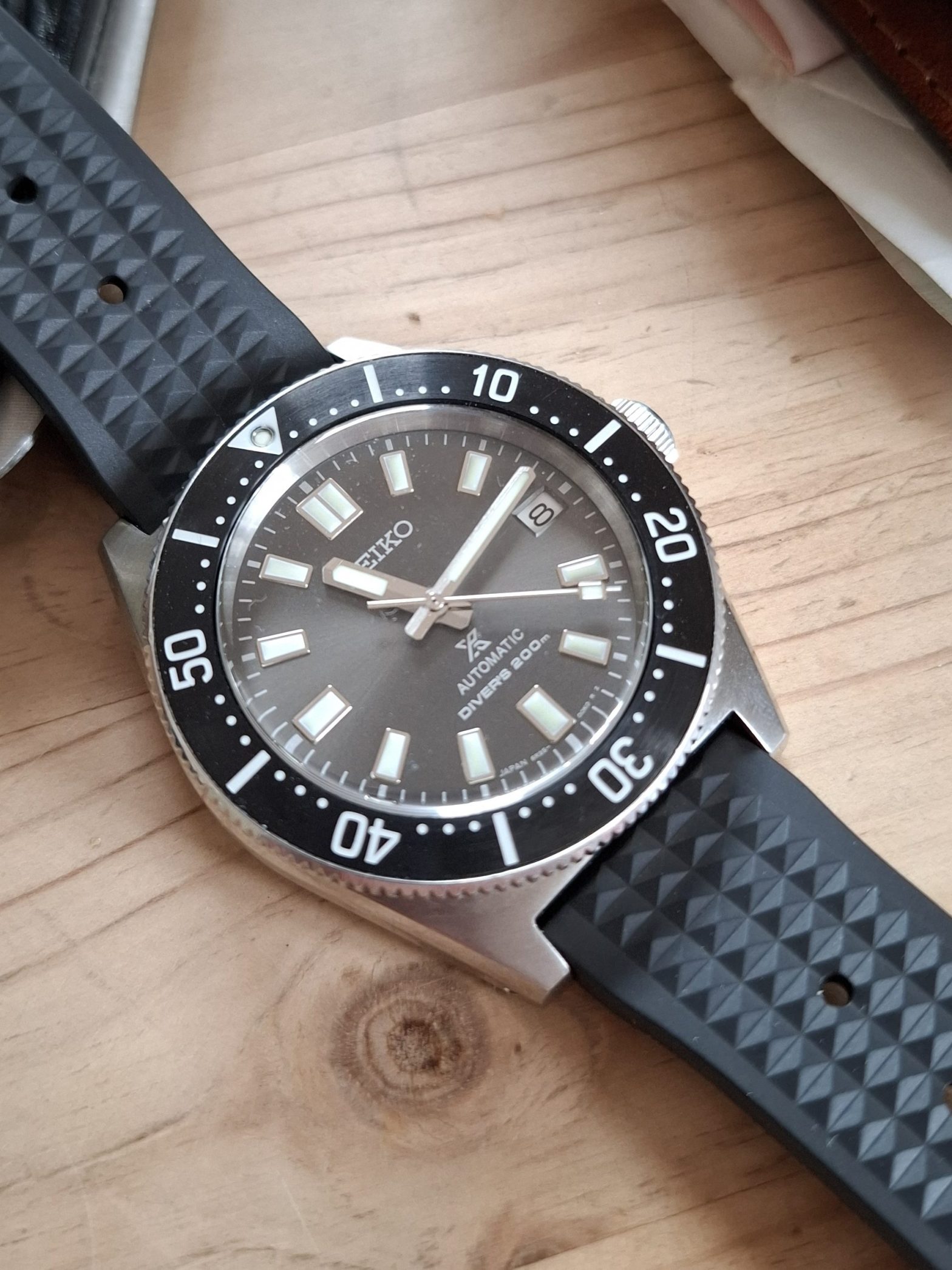
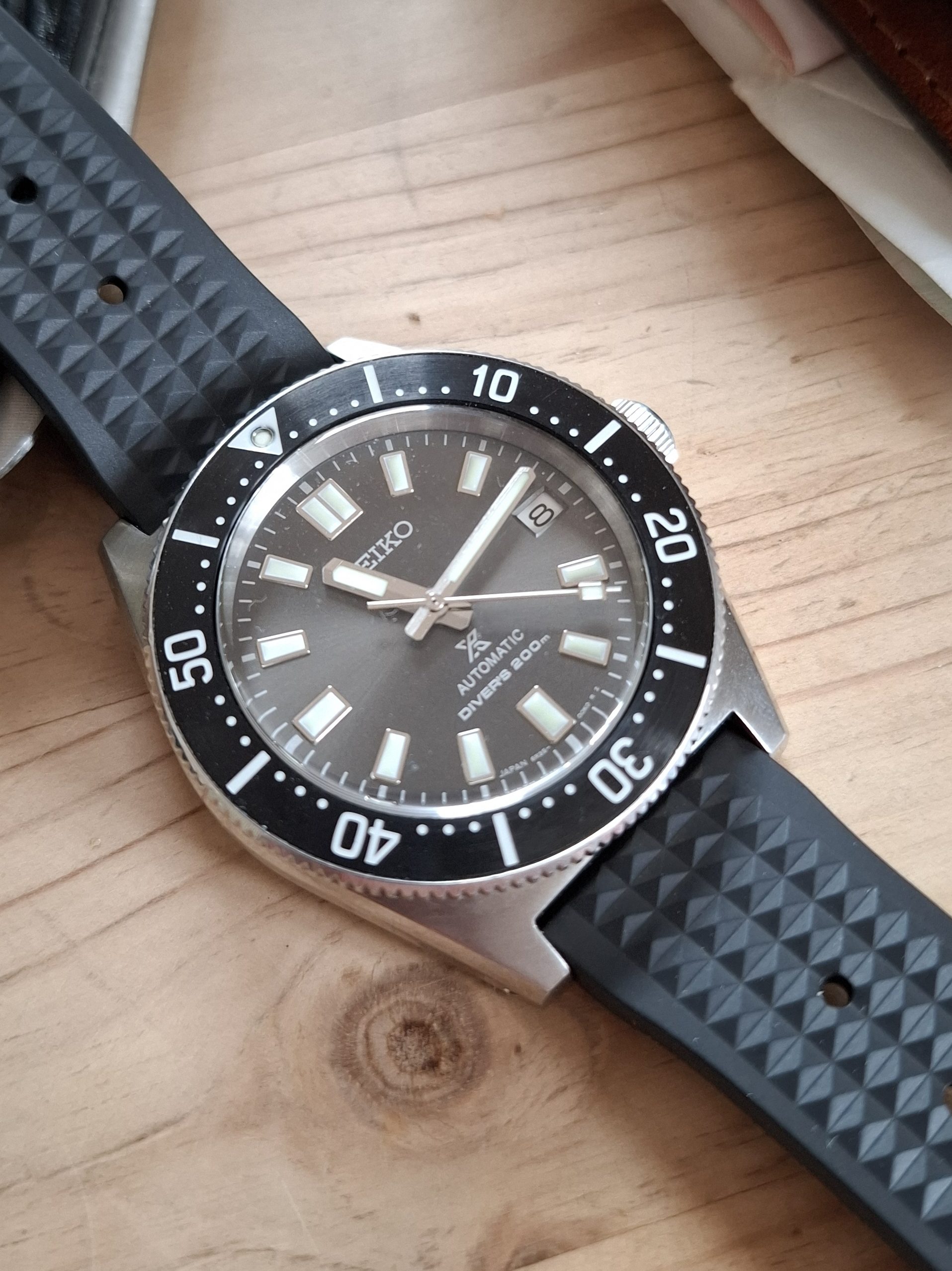
It took about six weeks for Seiko’s Prospex SPB143 dive watch to go from new release in 2020 to a watch universally described as an instant and future classic.
I’m not certain that even Seiko knew exactly what was about to happen when they launched the SPB14X range, of which the 143 was one of four original variants. I like to think that the deafening acclaim, immediate (and then enduring) love and monster sales took them a bit by surprise.
Four years later and the SPB143 is one of “that” very select group of watches; i.e. something pretty much every watchie owns, has owned or will own.
With a new price tag of £1200 here in the UK (the same in dollars across the Pond) they’re not a cheap watch, but are firmly in the “affordable mid range” bracket for dive watches. That means that a combination of the passage of time, a reasonable initial retail price and plenty being out there to buy makes the SPB14X range a very tempting pre-owned proposition these days.
So, only four years behind the curve (which isn’t bad for me), I’ve bought one.
I’d always been curious, but my collection includes a vintage 6309-729a, an SBDX017 Marine Master I bought new in Japan in 2017 and a 2016 Seiko Padi SRPA21 beater, and that’s just the Seiko divers, so there really wasn’t either a gap, or a need, for what Hodinkee’s James Stacey describes as the “simply do it all” dive watch.
But when has that ever stopped any of us?
So when one came up in my network recently, and at a very good price, I decided I couldn’t tune out the noise any longer and picked it up.
Would it live up to the hype? Were the acres of print coverage hyperbole? Has it stood the test of time?
Well put it this way – now I have a problem. It’s the same one James Stacey had, and the same one lots of other SPB143 owners have. It’s too good.
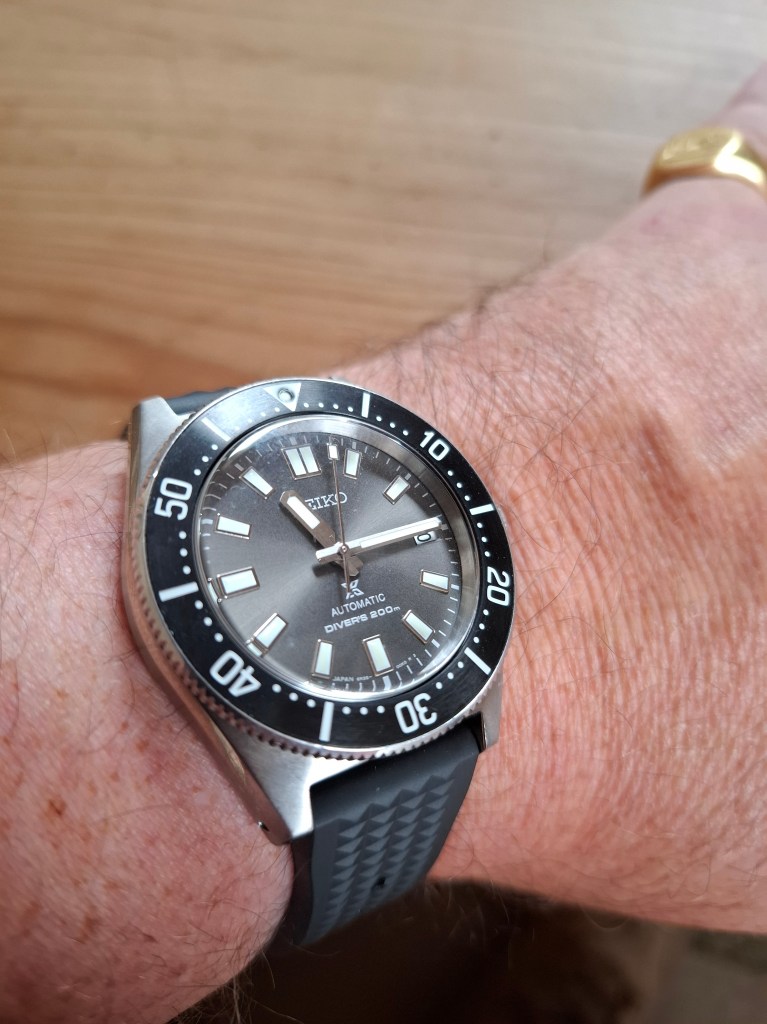
Perfect size, superbly legible, amazing lume, tough as old boots, super cool retro looks (of which more in a moment), excellent quality at the price point and, as so many have said, it’s an absolute strap monster – it looks superb on, well, anything. My dive watch box has remained closed for a while now, with a Submariner, a Seamaster, an SAR Rescue Timer, a KonTiki plus all the Seikos simply living in the dark.
The hype wasn’t misplaced, damn it.
So, why is this thing so special? Well let’s start with what it actually is.
I suppose the first thing to say is it’s a Seiko dive watch. For many watchies Seiko divers are always emotive. It’s how most of us came in to the hobby. That starts it with an advantage in terms of pulling the heart strings, but there are a lot of Seiko dive watches, and very few new pieces become such icons so quickly.
Significantly, the SPBX watches were (in 2020) Seiko’s latest in a long line of reinterpretations of the 62MAS, the company’s first proper dive watch from 1965 which changed the game. Until 2020 all these retro or reimagined 62MAS watches had been sat in Seiko’s upper end – sort of as close as the brand dares get to Grand Seiko pricing without crossing that line.
What 2020 and the SPB14X range gave us was the first affordable “62MAS” watch from Seiko in a size more suited to daily wear at 40.5mm (and 13.7mm high with a perfect 46.5mm lug to lug). This was a winning combination alone, but there was so much more.
There were clear retro elements to the design which have a lot of 62MAS about them. It’s a slightly modernised 1960s look, but the modernisation isn’t hidden, it’s celebrated. Think Alpine A110, to take a car design comparison – all the core retro elements are there, but it’s not ashamed to be a technically bang up-to-date contemporary take on those 60 year old design cues.
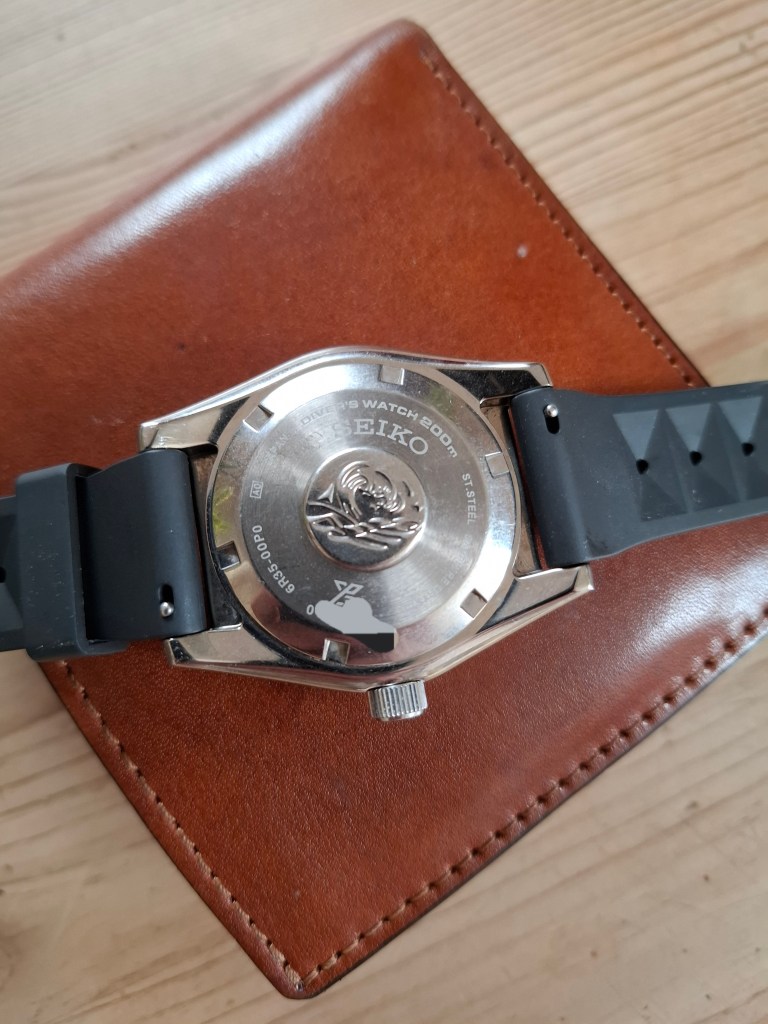
The specs were impressive too. Sapphire crystal, a stainless steel rather than aluminium bezel insert, drilled lugs (hooray!), screw down crown and case-back, plus bezel, bracelet and case treated with Dia-Shield, Seiko’s protective coating. There was 200m WR across the SPBX range and fit and finish were excellent.
But the 143 was the watch from the range (of four different colourways) that just caught fire to the point it almost crashed the blogs. James Stacey’s pieces on his watch, which he wore more than any other for a year, and still does, remain amongst Hodinkee’s most popular articles even now.
There were two reasons. One was the watch itself, but the other, just as crucial, was something less easy to pin down. We’ll come to that, but let’s look at what comes in the box first.
143 sported a simply gorgeous sunburst grey dial which played with light beautifully, together with one of the great handsets – brushed on one side, polished on the other – which, like the dial, allowed light to reflect off the surfaces in different ways. It was also the watch from the range which most closely channeled 62MAS DNA.
Inside Seiko went for the tried and tested 6R35 motor – the top level version of the 6R movement range which is the workmanlike mainstay of its mid range watches. It’s not a flashy movement; not that you can see it behind the closed case-back – quite right too for a tool watch. 6R35s are listed as +25/-15s per day for accuracy, but Seiko is notoriously conservative about these kinds of things and most owners are seeing performance more like +10/-5s per day, sometimes less. The 70 hour power reserve is in line with much more expensive offerings too. This is a Cummins V8 diesel of a movement – blue collar to the core, but cleverer than you might think, as well as effective, reliable and bulletproof.
Bezel action was good (120 click) and even the bracelet (never, even we Seikosha will admit, the company’s strong point) was, well, fine.
Seiko has added new models to the SPBX range in the four years since the launch, and also made changes to the 143, most notably (and controversially) squeezing a tiny lume dot between the date window and the “3” marker (not that there are any numerals of course) in order to comply with subsequently updated ISO6425 requirements (the international certification for a proper dive watch). I’m pleased mine’s one of the originals without this new dot. I understand why Seiko had to add it, marketing is marketing, but I think it trips up the otherwise very special dial.
All of this explains why this is a good watch, maybe even a very good watch, but it doesn’t, at least in this granular form, deal with why it’s become the phenomenon it has; the second part of the question we asked ourselves above, in other words.
The answer to that is it’s about what all these elements add up to, and it really only becomes clear in the wearing (which is why sites like Hodinkee and Fratello have run “a year on the wrist” pieces in which authors have explained how the 143 just gets under your skin).
I’d sum it up like this…
Here’s a watch that will cope with taking an absolute battering; diving, on a boat, climbing, you name it, but looks just right in the ocean-side restaurant afterwards and will then slip happily under the cuff of your shirt on Monday morning when you go back to work. Unless you’re a mechanic and you don’t have a cuff. But guess what? It’ll be fine in the workshop too.
It looks cool as hell thanks to that 62MAS retro 60s vibe, but is also supremely legible, night or day, and as reliable and capable as any of the most modern tool watches.
You can stick it on a rubber, Tropic, NATO or Isofrane to use it in the water, and it looks amazing. In winter you can put it on a leather or suede strap and it looks, well, also amazing.
And whatever you wear it with it manages never to appear showy, or trying too hard (for me the ultimate watch crime), but it still looks high quality and catches the eye.
In other words it does absolutely everything brilliantly, whatever you throw at it, whilst being appropriate to wear in any situation, anywhere. It’s a social and practical chameleon which works everywhere, for everything, always.
Why, then, are you going to reach for anything else?
I can’t find an answer to this question. Just as importantly, I really don’t want to.